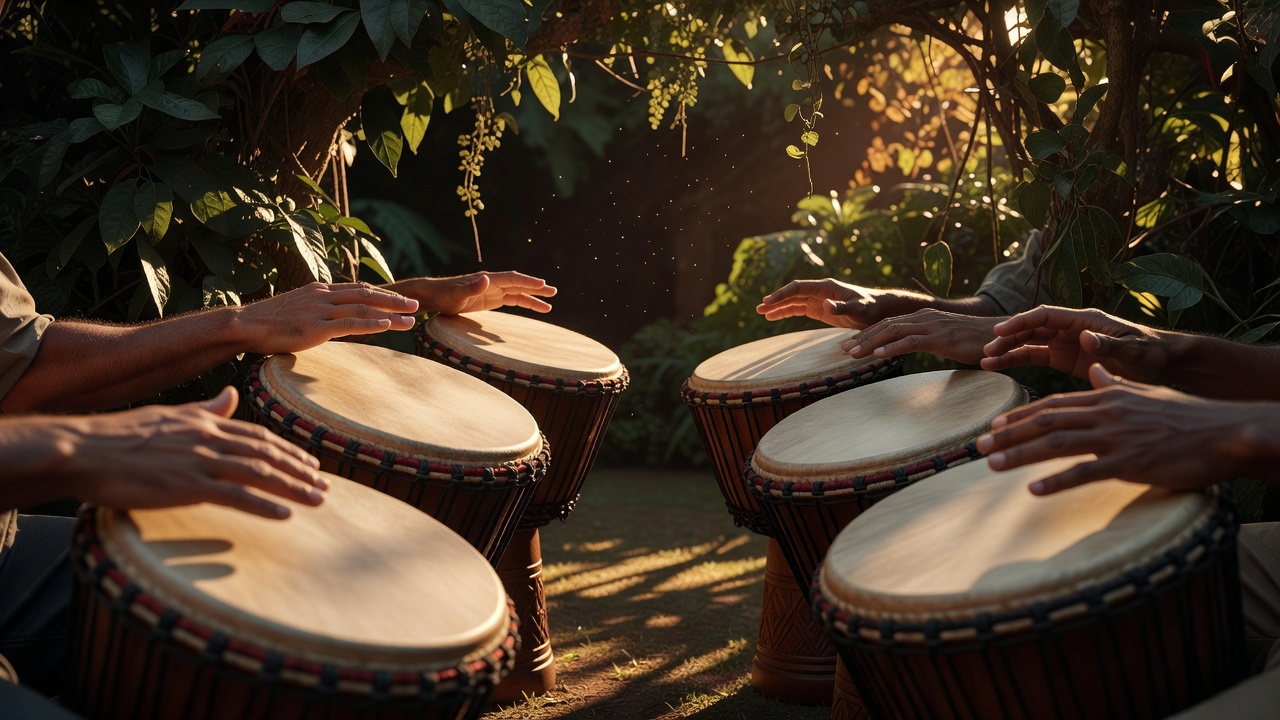
Decide what kind of session it is
A family rhythm hour on a Sunday afternoon, a monthly circle for friends and a one-off birthday jam all need different preparation. Name the type when you invite people. It sets expectations about length, volume and whether children are welcome, and it saves awkward conversations later.
Community drumming has deep roots. Babatunde Olatunji's 1959 album Drums of Passion introduced many Western listeners to group hand drumming, and Mickey Hart's book Drumming at the Edge of Magic explored why shared rhythm feels so good. You do not need any of that background to host, but it is a reminder that the point is connection, not performance.
Talk to the neighbours first
The single most effective noise control is a friendly conversation a week before. Tell neighbours the date, start time and finish time, and give them your phone number in case anything bothers them. Many will appreciate an invitation to join or simply to listen from their own garden.
In England and Wales, the Noise Act 1996 gives councils powers over excessive night-time noise between 11pm and 7am, and statutory nuisance rules can apply at any hour. The World Health Organization's 2018 Environmental Noise Guidelines for the European Region also highlight the health effects of persistent noise. The practical message is simple: play in daylight, keep sessions to around two hours and end when you said you would. Rules differ elsewhere, so check with your local authority.
Shape the volume, do not just limit it
Hand drums are percussive and loud at close range. Give the session a shape: start with shakers and soft frame-drum patterns, build to a fuller groove in the middle and finish with a quiet, slow rhythm. Offer earplugs in a bowl by the path, especially for children and anyone sitting close to large drums. If one corner of the circle faces the boundary, put the softest instruments there.
Make every guest comfortable
Mix the furniture
Armless stools for drummers, chairs with arms for anyone who needs support, and one clear bay for a wheelchair.
Lower the barrier
A basket of loaner instruments on a mat in the centre means nobody has to bring or buy anything.
Put water and shade within reach, keep the path lit if the session runs to dusk, and tell guests where the toilet is before you start. Small comforts keep people relaxed enough to play.
Simple facilitation
Someone needs to hold the rhythm together, even in a casual group. Facilitators trained in the Village Music Circles approach developed by Arthur Hull use a few clear gestures: an open hand to invite a section in, a palm down to bring volume lower, and a raised fist countdown to stop together. Agree two or three signals at the start and the session will feel organised without feeling formal. Rotate the role so nobody feels watched.
Weather plans
Check the forecast on the morning of the session and again an hour before. Natural-skin drums should not get wet, so keep a cover box at the edge of the circle. If showers are likely, move under a pergola or postpone. A short message to guests is better than damaged instruments.
Ending well
Finish with a slow fade rather than a sudden stop, then invite everyone to help carry instruments back to the store. Wipe down heads and shells, check the lawn or deck for dropped shakers, and send neighbours a thank-you note. These small habits keep the next session welcome.
Session checklist
- Session type, start and finish time shared with guests
- Neighbours informed at least a week ahead
- Loaner basket of drums and small percussion in the centre
- Earplugs, water and shade ready
- Accessible seat and step-free path checked
- Two or three hand signals agreed
- Cover box ready for rain
- Instruments wiped and stored before dew settles